Do the tips I shared in this workshop, and you will absolutely minimize your C-section Shelf.
But if you want to MAXIMIZE your healing opportunity, it’s necessary to do the right exercises every day, starting on Day 1.
Learn what these are, in just 5 minutes a day, in my self-paced online program “C-section Prep: Stage 1”.
And for a limited time, sign up below and receive 20% off.
Your exclusive discount link will be sent straight to your email and will be available for 24 hours only.
After that, the program goes back to full price.
The C-Section Shelf: What it is and how to prevent* it
If you’re worried about how your belly will look after your C-section, you’re not alone. Millions of women around the world birth their babies surgically every year, and virtually none of them are told about what to expect and what to do about it.
Trust me, I’ve asked. 🙁
Further, you might be thinking about:
- How painful C-section recovery will be
- How weak your core might feel
- And whether that dreaded C-section shelf will be permanent
Here’s the bad news - while your hospital team might care about your worries, they’re not actually trained in what to do.
So, do not expect to get much guidance there.
Here’s the good news - as a therapist to thousands of C-section moms, I want you to know -
You’re not vain for caring about what your body will look like.
It actually matters a lot, because how your belly looks after surgery tells you exactly how your body is healing. Especially in the first six weeks.
The better news?
YES, there is something you can do about the C-section shelf. And these interventions are surprisingly simple, and very effective.
Take home message: The C-section shelf is not inevitable — and recovery doesn’t start after surgery. It starts before.
Keep reading to learn more.
*As a Perinatal Athletic Therapist, it’s important for me to note that tips shared in this article cannot guarantee prevention of a chronic C-Shelf. While these post-operative tips will make a difference, results are different for every Body.
What Is a C-Section Shelf?
A C-section shelf is the fold or overhang that can appear above or below the incision in the weeks after a Cesarean birth.
It’s not:
- Fat gain
- Laziness
- Failure to “bounce back”
It is the result of three predictable things:
- Post-surgical swelling
- Scar tissue formation
- Stretched and disconnected abdominal muscles
And of course, stretched skin and fat.
But the point is, 👉 Every single C-section mom experiences these to some degree.
Is the C-Section Shelf Permanent?
Short answer: No.
But here’s what most moms aren’t told:
👉 The shelf becomes long-term when swelling lingers, scar tissue tightens, and the core never reconnects properly.
That’s why rest alone doesn’t fix it — and why waiting until 6 weeks postpartum often delays healing.
Why Most C-Section Advice Fails Moms
Most moms are often told:
“Just rest for the first 6 weeks.”
“Don’t lift anything but your baby.”
“Give it time. That will heal everything.”
What they aren’t told is that you can actually do something intentionally to:
- reduce swelling
- prevent tight scar tissue
- reconnect muscles safely
- .. and ideally, to start this all before surgery
No other orthopedic surgery is treated this way. And yes, a C-section is major abdominal surgery. And so in my opinion, C-sections require intentional rehabilitation in order to heal optimally, no different than a knee surgery or hip replacement. Makes sense, right?
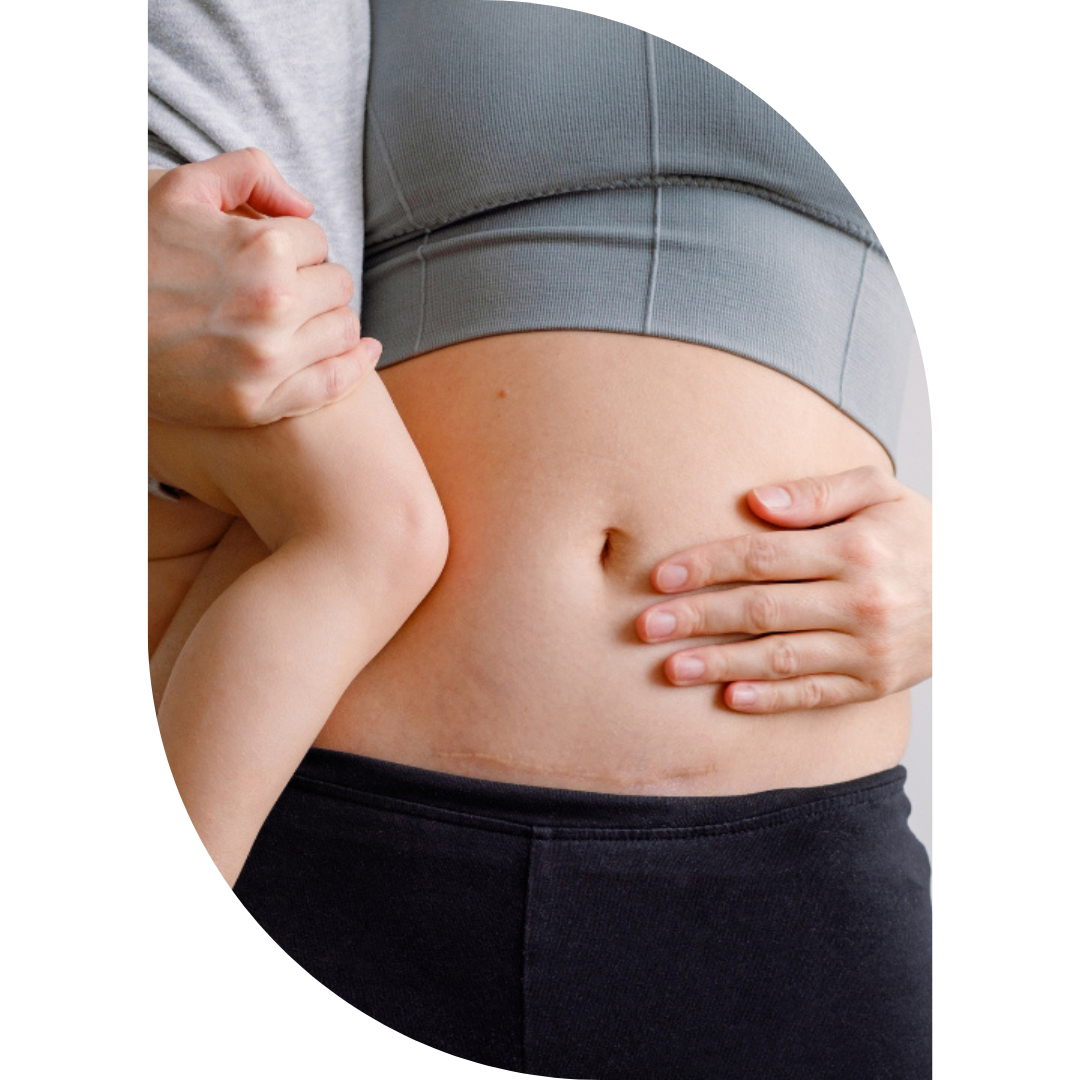
The 3 Biggest Causes of the C-Section Shelf
Allow me to smarten down exactly why the C-section Shelf is caused in the first six weeks. (By the way, the main causes of the Shelf after the six week mark changes, but that’s for another blog!)
1. Swelling
All surgeries cause swelling. After a C-section, there’s tons of swelling. I mean, think about it - seven layers of tissue were cut through, right down to your uterus, which is in the very center of your body. Every cut causes bleeding and swelling. With the abdominal cavity being very big (compared to a joint, let’s say), there is potential for a huge amount of fluid to accumulate.
If left unmanaged, swelling pushes tissue forward — creating the shelf. And pain. And can be mostly managed within the first six weeks, with simple but careful steps.
But I digress.
2. Tight Scar Tissue
Scar tissue in the human body is like super glue. It sticks all your incision together (thank goodness!), but it’s also by default very tight and very sticky.
In addition, the C-section surgery defaults to using only one set of stitches to stick together your skin and fat. Some surgeons use staples, glue, or a combination of techniques. But what’s important is that these first two layers often stick to the myofascial incision, which is typically 1-2 inches above the external incision. And that incision in turn often sticks to the linea alba incision (yes, that’s where your diastasis is. Yes, it’s cut during your surgery!)
Result?
All four layers general stick together. Unless you can get a plastic surgeon to close you up after your C-section.
Scar tissue pulls inward and downward, tucking tissue underneath the incision.
Over time, this Shelf becomes more and more prominent as swelling reduces and weight is lost.
3. Loose or “Offline” Abdominal Muscles
During pregnancy, everything stretches - including your ab muscles. Stretched out muscle, by nature, is weaker than muscles that are more taut.
Also, as mentioned above, the tendon that holds those ab muscles together - the Linea alba - is cut during the C-section surgery. Therefore, the abdominal muscle wall is not physically connected until the Linea alba scars down!
Further, the nerves that connect these ab muscles to your brain are complete disconnected after surgery. When muscles don’t ‘reconnect to the brain’, no amount of strengthening will help, and the belly looks heavy and unsupported.
Another big reason for the C-section shelf.
The solution? Address all three — early.
“How do I prevent a C-section shelf?”
This is called C-section prehab — and it takes 5 minutes a day.
Step 1: Belly Breathing (Starts While Pregnant)
Belly breathing:
- Reduces swelling
- Reinforces brain → muscle pathways if done during pregnancy, and ‘reconnects’ after surgery
- Lowers pain
- Activates deep core muscles
Step 2: Infection Prevention (Hospital Strategy)
Many moms I’ve worked with have the unfortunate complication of infection after C-section. This can be a major systemic infection requiring IV and drainage tubes, or minor local infections with varying degrees of pain and management time.
Bottom line, infection causes more scar tissue, and pushes back precious rehab time.
Your best bet? Prevent infection with these quick tips:
- Minimize Moisture - A simple maxi-pad placement strategy keeps the incision dry and protected.
- Keep the wound clean - daily cleaning is a must
- Gentle movement - short, frequent walks encourages blood flow and reduces stagnation
Step 3: Abdominal Compression (Done Right)
Compression when done right is the single most effective strategy to decrease swelling, and therefore the C-section Shelf, in the first six weeks. I’ve heard healthcare professionals discouraging women from using compression for fear of causing weakness to the abdominal wall. While this may have some truth to it if worn too tightly and for months and month, the benefits far outweigh the disadvantages in my experience.
Compression with tools like ab wraps and compression garments can:
- Control swelling
- Protect healing muscles
- Improve comfort and confidence
Quick tip here - tighter is not better! Do not use things like exercise “belly binders” or aggressive “shape wear”. It doesn’t take much to manage post surgical swelling.
When C-Section Recovery Actually Begins
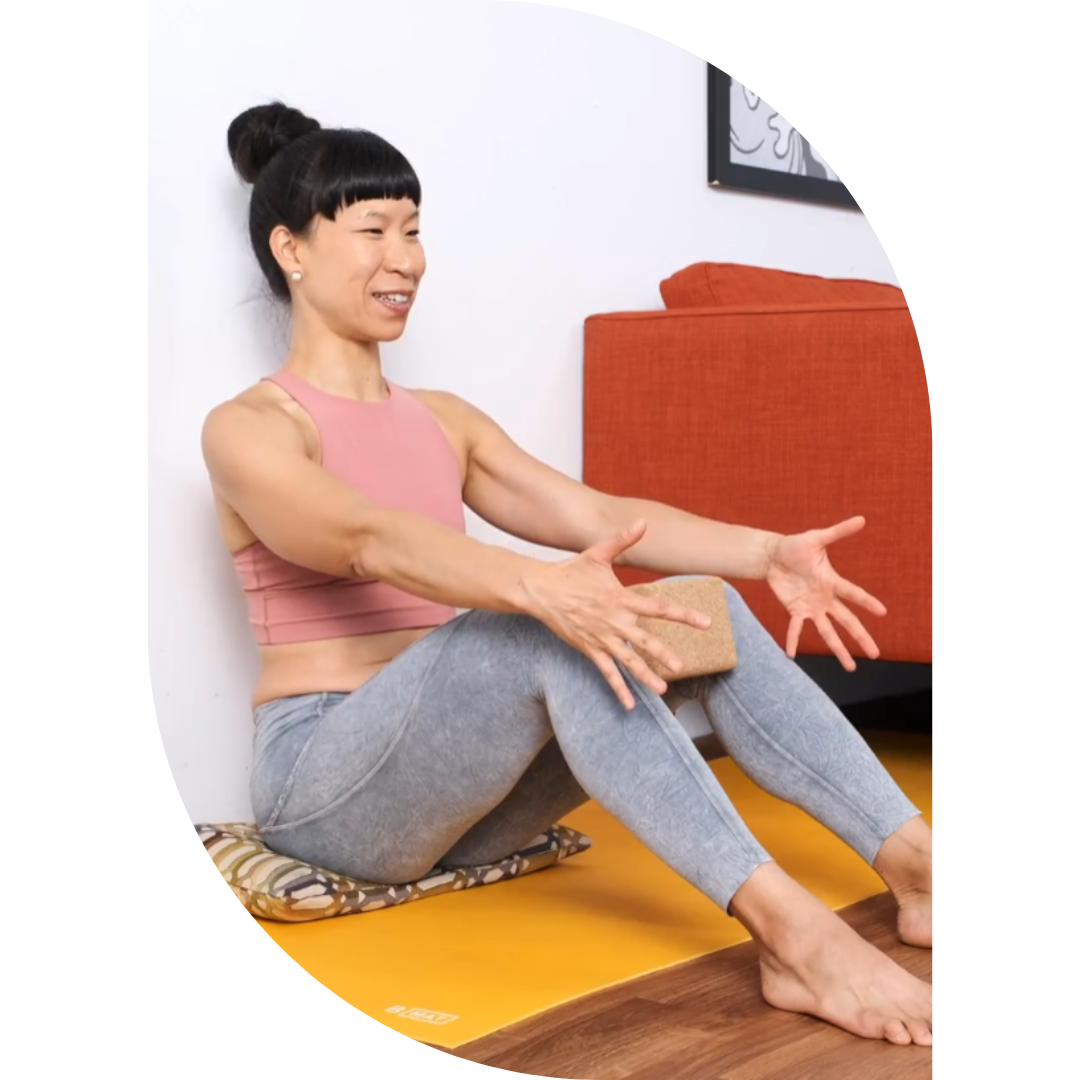
As you are now well aware, ideal C-section recovery begins on Day 1. And the best way to prepare for this is before surgery.
Let’s put all these suggestions above into a clear timeline:
- 8+ weeks before surgery: Learn breathing + core exercises + prep supplies like compression wrap
- Day 1–Week 6 postpartum: Gentle rehab + swelling control
- Week 6+: Scar massage + progressive strength
This approach dramatically reduces:
- Immediate and long-term shelf appearance
- Chronic pain
- Core weakness
Want a Done-for-You Plan?
Got Questions?
I got answers.
Let’s make sure you feel ready — inside and out.
Drop your questions below.